
How to create a token without coding: a practical step-by-step guide
Learn the basic flow for creating a fixed-supply token on BNB Chain, Polygon or Base without writing Solidity: configuration, wallet, service fee, gas and onchain confirmation.
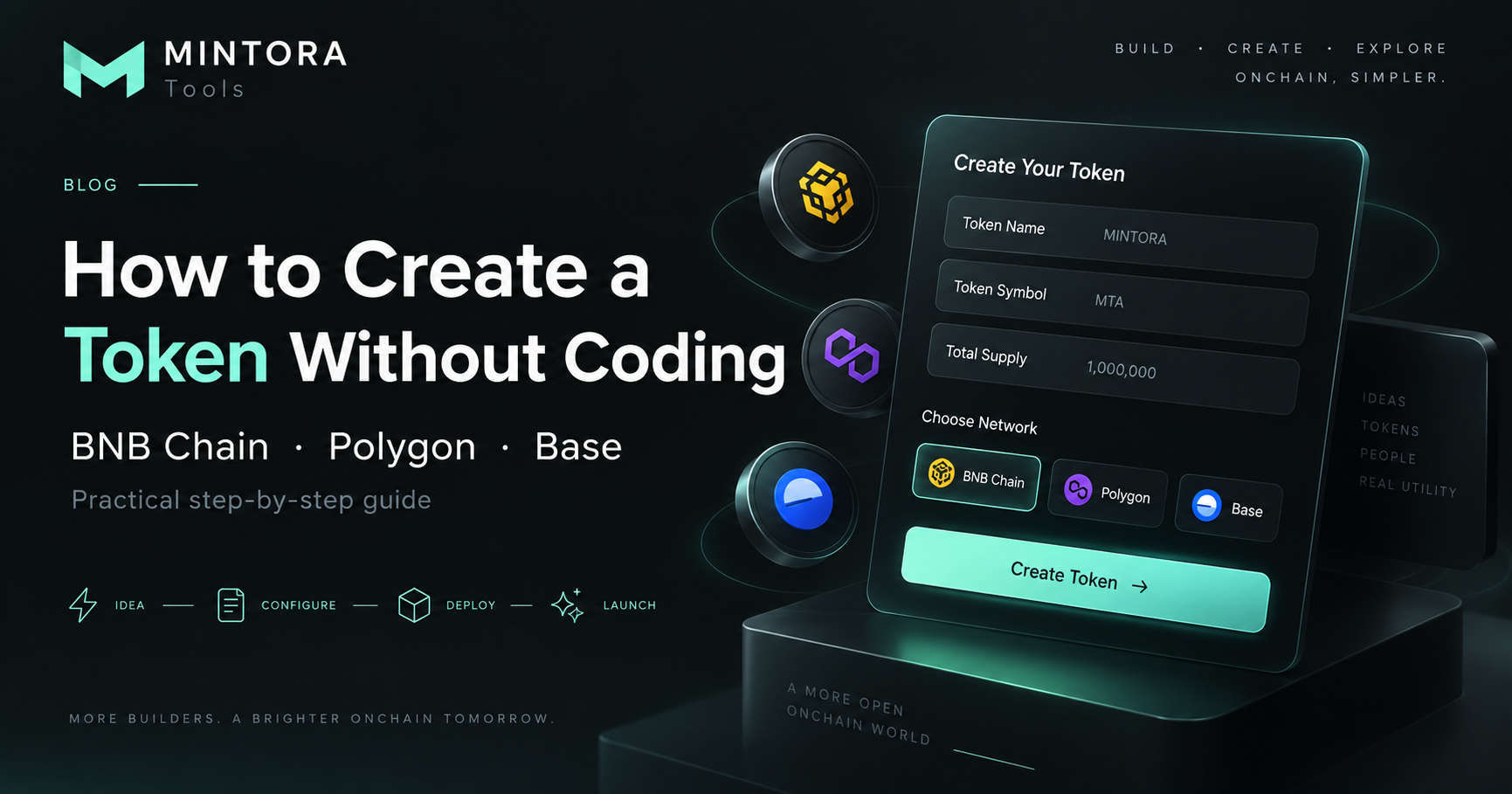
Creating a token on an EVM network no longer necessarily means writing and deploying a smart contract from scratch. A no-code tool can simplify the technical setup while keeping the final transaction confirmation in your own wallet.
What do you need before you start?
Before creating the token, define three basic parameters: the token name, its symbol or ticker, and the total supply. In the current MINTORA Tools model, tokens use 18 decimals and a fixed supply set at creation.
You also need a wallet compatible with the selected network and enough balance to cover gas. Gas is not the MINTORA service fee: it is the blockchain execution cost and is paid with the native asset of the selected network.
Step 1: choose the network
MINTORA Tools currently supports token creation on BNB Chain, Polygon and Base. The workflow is similar across the three networks, but gas costs and the asset used to pay gas differ by blockchain.
BNB Chain uses BNB for gas, Polygon uses POL, and Base uses ETH. Always confirm that your wallet is connected to the intended network before approving the transaction.
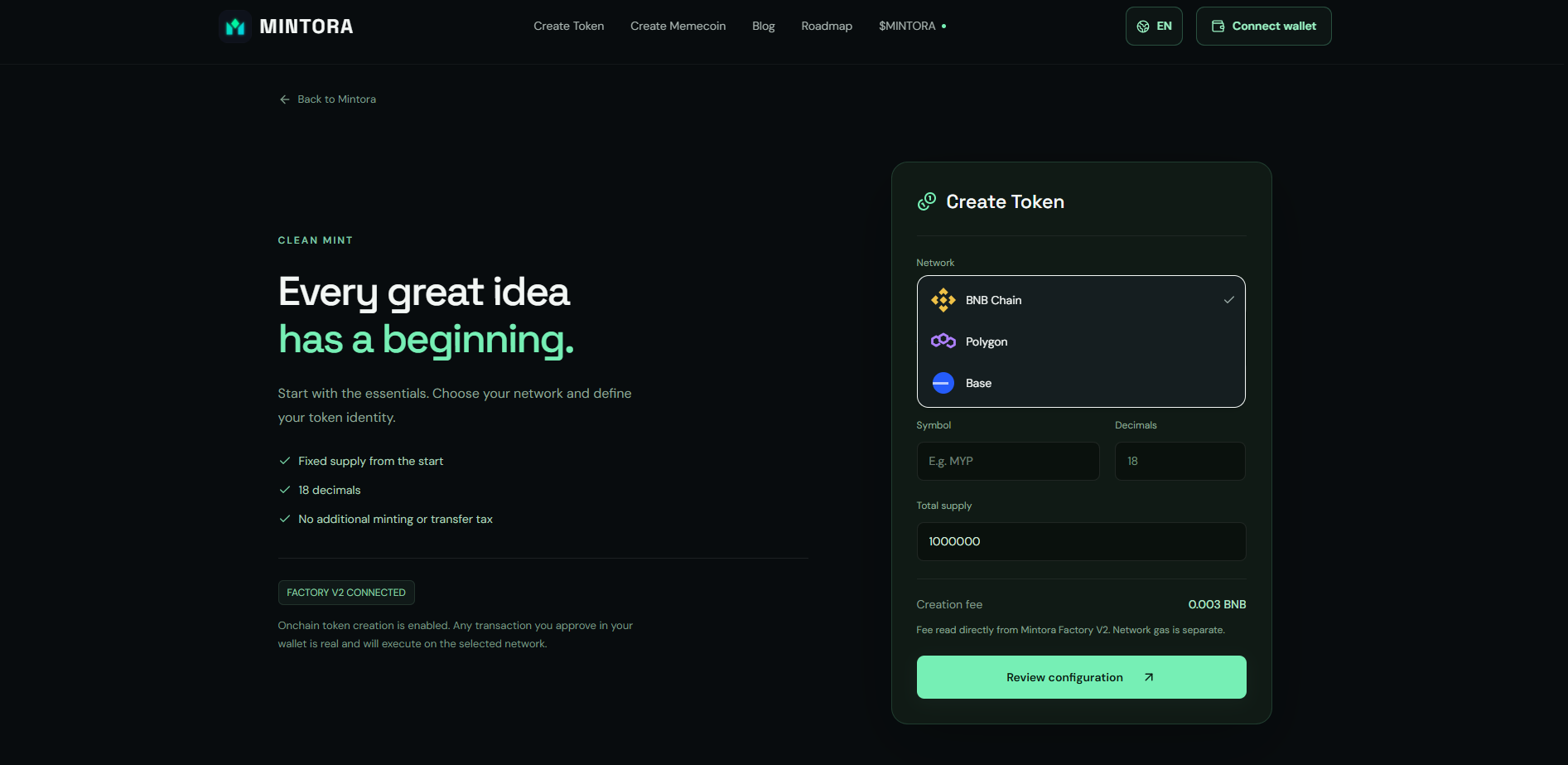
Step 2: configure the name, symbol and supply
Enter the token name, its symbol, and the total supply. Review these values carefully because they are part of the configuration used for the onchain creation.
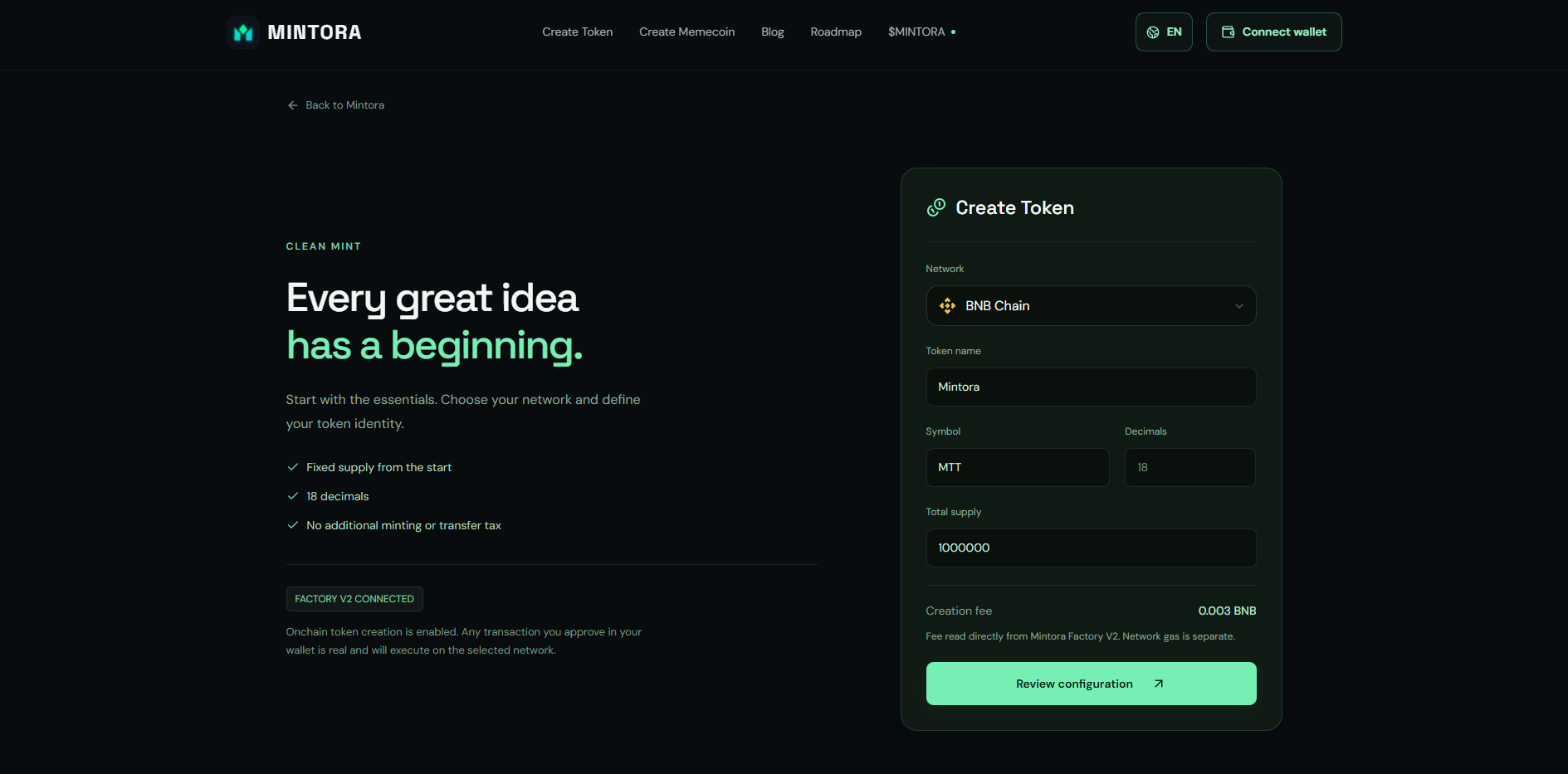
Step 3: connect your wallet
Your wallet authorizes the transaction. MINTORA does not need your seed phrase or private key. The final confirmation happens directly in the user's wallet.
Step 4: review the service fee and gas
Before confirming, review the service fee displayed by the application. Blockchain gas is charged separately and can vary depending on the network and current blockchain conditions.
Step 5: confirm the onchain creation
When the configuration is correct, request the transaction and confirm it in your wallet. Once the network confirms it, the token is created onchain and you can view the contract address and open it in the corresponding block explorer.
What does fixed supply mean?
In the current MINTORA model, the supply is defined at creation and there is no later mint function to increase the number of tokens. The current model also does not include a transfer tax. These properties describe the created contract, but they do not by themselves guarantee security, value or liquidity.
What should you check after creating the token?
Save the contract address, open the transaction in the network explorer, and verify that the token name, symbol and supply match your configuration. Do not confuse token creation with exchange listing, liquidity or price: those are separate processes and MINTORA does not guarantee them.
Choose the network for your token
For the network-specific workflow, see our guides for BNB Chain, Base and Polygon. Each guide covers the gas asset, wallet checks and post-creation verification for that network.
Conclusion
The purpose of a no-code token creator is to reduce technical friction: choose a network, define the parameters, connect your wallet, review the costs and confirm a real blockchain transaction. If you want to test the flow, you can open the MINTORA Tools token creator and review the configuration before signing.
Frequently asked questions
Do I need to know Solidity to create a token with MINTORA?
No. The MINTORA flow is designed to configure and create the token without manually writing Solidity code.
Which networks can I currently use to create a token?
The current MINTORA Tools flow supports BNB Chain, Polygon and Base.
Does the MINTORA service fee include blockchain gas?
No. The service fee and blockchain gas are separate costs. Gas depends on the selected network and current blockchain conditions.
Does creating a token guarantee liquidity or price?
No. Creating the contract does not guarantee liquidity, price, community growth, exchange listings or financial performance.